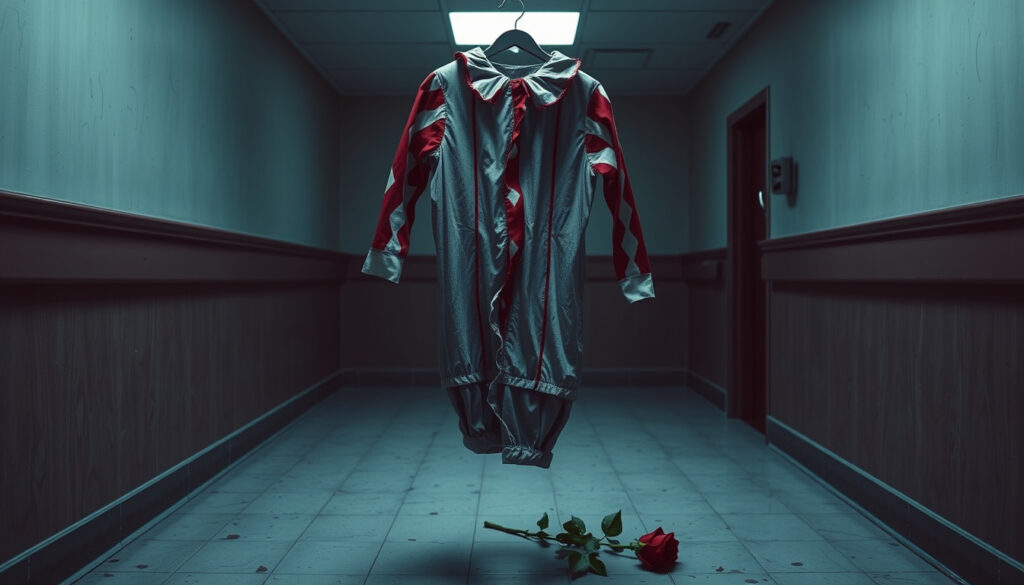
Harley Quinn: Story, Mental Illness, and Relationship with Joker
There’s something about a character who starts as a therapist and ends up becoming the patient. Harley Quinn didn’t just fall into crime—she was a promising psychiatrist who got tangled in the Joker’s web and never quite escaped. This article traces her origin from Arkham intern to anti-hero, examines the toxic relationship that defined her, and unpacks the mental health diagnoses that have followed her across comics and screens.
First Appearance: Batman: The Animated Series (1992) ·
Created by: Paul Dini and Bruce Timm ·
Real Name: Dr. Harleen Frances Quinzel ·
Affiliations: Joker, Poison Ivy, Suicide Squad, Birds of Prey ·
Common Diagnosis: Histrionic personality disorder, dependent traits
Quick snapshot
- Created by Paul Dini and Bruce Timm for Batman: The Animated Series (DC.com (official publisher))
- First appeared in 1992 (DC.com (official publisher))
- Originally a psychiatrist named Harleen Quinzel (DC.com (official publisher))
- Toxic codependency with the Joker (TIME (established news magazine))
- Close partnership with Poison Ivy (DC.com (official publisher))
- Member of the Suicide Squad and Birds of Prey (DC.com (official publisher))
- Peak human agility and acrobatics (DC.com (official publisher))
- Expert psychiatrist and manipulator (DC.com (official publisher))
- Uses signature mallet and pop guns (Arkham Wiki (fan reference))
- Batman: The Animated Series (DC.com (official publisher))
- Suicide Squad (2016) (TIME (established news magazine))
- Birds of Prey (2020) (DC.com (official publisher))
- Harley Quinn animated series (2019–) (CompleteSet (comics history site))
| Attribute | Value | Source |
|---|---|---|
| Full Name | Dr. Harleen Frances Quinzel | DC.com (official publisher) |
| First Appearance | Batman: The Animated Series, “Joker’s Favor” (1992) | DC.com (official publisher) |
| Creators | Paul Dini, Bruce Timm | DC.com (official publisher) |
| Affiliations | Joker, Poison Ivy, Suicide Squad, Birds of Prey, Gotham City Sirens | DC.com (official publisher) |
| Aliases | Harley Quinn, Harleen Quinzel, Harley | DC.com (official publisher) |
| Common Diagnosis | Histrionic personality disorder, dependent traits | Fandom Articles (fan psychology analysis) |
| Notable Portrayal (2016) | Margot Robbie in Suicide Squad | TIME (established news magazine) |
What is Harley Quinn’s story?
Origins as Dr. Harleen Quinzel
Harleen Quinzel was born in Canarsie, Brooklyn, New York, the oldest of four children and the only girl, according to a DC Database summary of Prime Earth continuity (DC Database (fan wiki; medium confidence)). Her interest in criminal psychology began early, intensified by a troubling childhood relationship (DC Database (fan wiki)). She became a promising psychologist and interned at Arkham Asylum, where she had direct access to the Joker (DC.com (official publisher)).
Transformation into Harley Quinn
- Harley fell in love with the Joker during her sessions and eventually helped him escape (DC.com (official publisher)).
- She adopted the Harley Quinn persona as his sidekick and love interest (DC.com (official publisher)).
- The 1994 graphic novel Batman Adventures: Mad Love gave the first detailed origin story, portraying her fascination with the Joker as she fell in love (CompleteSet (comics history site)).
- In the 2011 Suicide Squad reboot, the Joker pushed Harley into acid, changing her appearance and deepening her insanity (TIME (established news magazine)).
Key comic story arcs
- Harley Quinn’s own ongoing series began in 2001 (after her popularity from Mad Love).
- The New 52 reboot (2011) gave her a darker, more independent persona.
- Recent arcs have explored her separation from the Joker and her role in the Birds of Prey.
The implication: Harley’s origin is not a single fixed event—it has been retold multiple times, with each iteration shifting the balance between her agency and her victimhood.
Harley began as a clinician trained to treat criminal insanity. She ended up embodying it. Her fall is less a villain origin and more a case study in how emotional vulnerability can be weaponized—a theme that resonates far beyond the page.
Is Harley Quinn a Joker’s lover?
Definition of their relationship in canon
DC’s official character page explicitly labels Harley Quinn as the Joker’s sidekick-slash-love interest (DC.com (official publisher)). However, the relationship is consistently portrayed as abusive and codependent. TIME reported that the Joker’s behavior toward Harley included physical violence and manipulative control (TIME (established news magazine)).
Variations across different media
- In Batman: The Animated Series, the Joker is emotionally distant and cruel; Harley is desperate for his approval.
- In the 2016 Suicide Squad film, the Joker’s affection is portrayed as obsessive, though still toxic.
- The Harley Quinn animated series (2019–) depicts her breaking free from the Joker and forming healthier bonds.
The Joker’s treatment of Harley
Fandom Articles (fan psychology analysis) describe the Joker as a manipulator who exploits Harley’s empathy, making her a target of coercive control rather than an equal partner (Fandom Articles (fan psychology analysis)). The power imbalance is clear: Harley gives everything; the Joker gives nothing genuine.
The pattern: Calling Harley the Joker’s “lover” misses the point. She is his victim in a trauma bond, not a romantic equal. This framing shifts the conversation from “Why would she love him?” to “How did he trap her?”
Many fans and adaptations want to romanticize the pair, but the text—from DC’s official bio to TIME’s analysis—consistently undercuts any “love story” reading. Harley’s attachment is pathological, not romantic.
Why did Harley Quinn turn evil?
Psychological breakdown
- Harley’s transformation resulted from her obsession with the Joker; she abandoned her ethics as a psychologist to be with him (DC.com (official publisher)).
- A psychology explainer on YouTube argues the character can be seen as a textbook case of trauma-bonding leading to criminal behavior (YouTube (psychology explainer; low confidence)).
Influence of the Joker
The Joker didn’t just seduce Harley—he systematically dismantled her professional identity. She became the Joker’s sidekick because she believed that was the only way to stay close to him (Arkham Wiki (fan reference)).
Loss of moral compass
Her descent was gradual: from enabling the Joker’s escapes to actively participating in crimes. The shift from doctor to criminal was driven by her emotional dependence, not by ideology.
The pattern: Harley didn’t turn evil because she wanted power or chaos. She turned evil because she prioritized one person’s approval over every other value she held.
What is Harley Quinn’s mental illness?
Clinical diagnoses in comics
Comics and media often depict Harley with histrionic personality disorder. A psychology-focused video describes her as showing traits of attention-seeking, emotional overreaction, and suggestibility (YouTube (psychology analysis; low confidence)).
Histrionic personality disorder
Key symptoms—excessive attention-seeking, emotional shallowness, and need for approval—align closely with Harley’s most consistent behaviors across continuities.
Dependent and borderline traits
She also displays dependent personality traits: an inability to make decisions without reassurance and a desperate need to be taken care of. Some interpretations add borderline features, especially fear of abandonment and identity disturbance.
The caveat: There is no single official diagnosis; diagnoses vary by writer and era. What’s clear is that her mental health struggles are rooted in attachment trauma, not in a purely chaotic or antisocial drive like the Joker’s.
Who’s crazier, Harley or Joker?
Contrasting psychological profiles
The same YouTube psychology analysis contrasts the two: the Joker lacks remorse and disregards others, while Harley is more relational and approval-seeking (YouTube (psychology analysis; low confidence)).
Five key differences, one pattern: the Joker acts from a void of empathy; Harley acts from a crack in her identity.
| Aspect | Harley Quinn | Joker |
|---|---|---|
| Core motivation | Attachment and approval (trauma-bonded) | Chaos and nihilism |
| Self-awareness | Partial; she often knows she’s in abuse | Near zero; he is delusional about his own agency |
| Emotional capacity | High; she feels intensely, especially love and shame | Low; he lacks remorse and genuine connection |
| Predictability | More predictable (driven by attachment) | Chaotic and unpredictable |
| Treatment in canon | Gradually redeemed; seen as a victim | Consistently portrayed as irredeemable |
The pattern: If “crazier” means more unpredictable and dangerous to society, the Joker wins. If it means more psychologically damaged and in need of help, Harley is the deeper case. The comparison is less a debate and more a mirror for two different pathologies.
Timeline of Harley Quinn’s major evolutions
- – First appearance in Batman: The Animated Series (DC.com (official publisher))
- – First comic series: Harley Quinn ongoing (CompleteSet (comics history site))
- – Rebooted in The New 52 with a darker, more independent persona (TIME (established news magazine))
- – Portrayed by Margot Robbie in Suicide Squad (TIME (established news magazine))
- – Lead role in Birds of Prey and star of Harley Quinn animated series (DC.com (official publisher))
What we know vs. what’s still unclear
Confirmed facts
- Harley Quinn’s real name is Dr. Harleen Frances Quinzel (DC.com (official publisher))
- She was created by Paul Dini and Bruce Timm (DC.com (official publisher))
- She originally appeared in Batman: The Animated Series (DC.com (official publisher))
What’s unclear
- Whether the Joker ever truly loved Harley—canon never gives a definitive answer (TIME (established news magazine))
- The exact nature of her mental illness varies by continuity; no official diagnosis is codified (Fandom Articles (fan psychology analysis))
- Whether she and the Joker had a child in mainstream canon remains disputed by fans and creators (CompleteSet (comics history site))
- Whether Harley’s origin story is consistent across all media—the 2011 acid-bath version differs from the classic Arkham seduction (TIME (established news magazine))
What the creators and the character say
“I thought: Why not create a female Joker? But he needed a girlfriend.”
– Paul Dini, co-creator of Harley Quinn (CompleteSet (comics history site))
“I used to be a psychiatrist. I can tell when someone’s crazy.”
– Harley Quinn (as voiced in Batman: The Animated Series) (Arkham Wiki (fan reference))
These two quotes frame the entire Harley paradox: one creator sees her as a supporting character, while the character herself insists on her own insight and agency. The gap between those perspectives is where most of Harley’s story lives.
For readers trying to understand Harley Quinn’s journey—whether for a school paper, fan curiosity, or clinical interest—the decision is clear: stop asking whether she loves the Joker, and start asking how she got trapped, what keeps her there, and whether she can ever fully escape. Because that story is not just hers—it’s a template for anyone caught in a toxic bond.
commons.vccs.edu, facebook.com, reddit.com, caliperwellness.com
For a deeper look into her backstory, check out Harley Quinns origin and mental health for a comprehensive guide.
Frequently asked questions
What is Harley Quinn’s real name?
Dr. Harleen Frances Quinzel. She originally used this name as a licensed psychiatrist before adopting the Harley Quinn alias (DC.com (official publisher)).
Did the Joker impregnate Harley Quinn?
In mainstream DC canon, no. Some alternate universe stories (like Injustice: Gods Among Us) have depicted the Joker fathering a child, but this is not considered primary continuity (CompleteSet (comics history site)).
Who did Harley Quinn have a child with?
In the Injustice universe, the Joker fathered Harley’s daughter Lucy. In mainstream canon, the question remains ambiguous—no child exists in the Prime Earth timeline.
Who created Harley Quinn?
Paul Dini and Bruce Timm created Harley Quinn for Batman: The Animated Series in 1992 (DC.com (official publisher)).
What are Harley Quinn’s powers?
Harley has no superpowers. She possesses peak human agility, expert psychiatric knowledge, and proficiency with weapons like a giant mallet and pop guns (DC.com (official publisher)).
Is Harley Quinn a member of the Suicide Squad?
Yes, in multiple comic series and the 2016 film, she serves as a key operative in Task Force X (the Suicide Squad) (TIME (established news magazine)).
Where does Harley Quinn appear in movies?
Harley Quinn appears in Suicide Squad (2016), Birds of Prey (2020), and The Suicide Squad (2021), all portrayed by Margot Robbie (TIME (established news magazine)).
What is the relationship between Harley Quinn and Poison Ivy?
Harley and Poison Ivy share a deep romantic partnership in many adaptations, especially the Harley Quinn animated series and modern comics. It is consistently portrayed as a healthier, more reciprocal bond than the one with the Joker (DC.com (official publisher)).
More related posts
 Paul Williams: Songwriter, Boxer, Journalist – Who Is Who
 Mitch Marner Trade: Why He Left Toronto & His New Life in Vegas
 What Are the Generations Called? Names, Years Explained
 Cailee Spaeny: Age, Height, Relationship, Movies (2025)
 Jean Coutu St Basile: Pharmacy, App & Prescription Services
 Sam Shepard: Life, Love, and the Murder Case Confusion
 Raquel Welch Cause of Death, Net Worth, and Inheritance Revealed
 Canada Passport Application Changes – New Fees and 30-Day Guarantee
