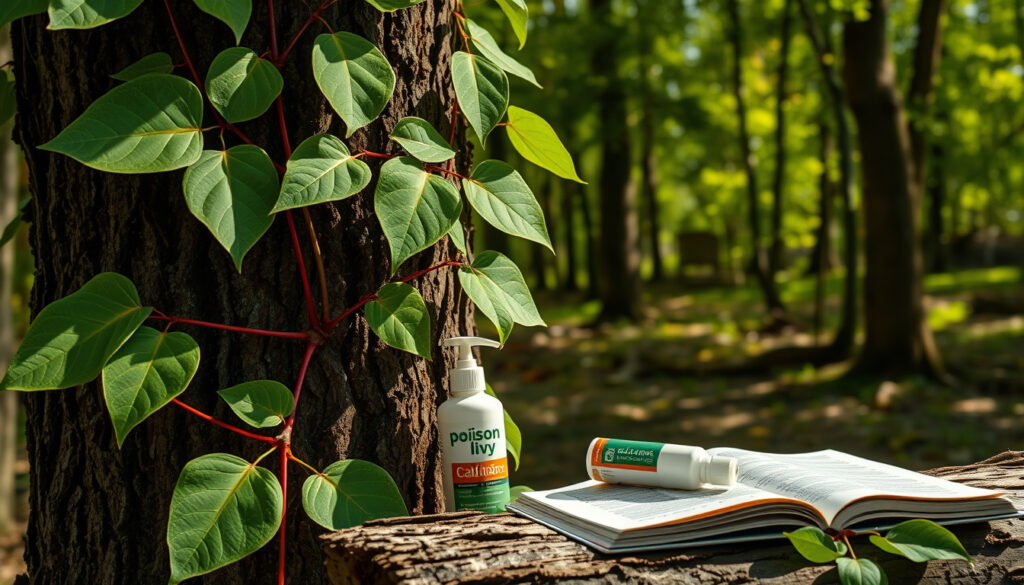
Poison Ivy: Rash Treatment, Myths, and Where It Grows
If you’ve ever brushed against a leafy plant and ended up with an angry, itchy rash, you’re not alone. Poison ivy is responsible for millions of allergic reactions each year, yet many people still believe it grows in places it simply doesn’t — like the UK, Ireland, or mainland Europe.
People allergic to urushiol: 85% ·
Time until rash appears: 12 to 48 hours ·
Duration of urushiol activity on surfaces: 1 to 5 years ·
Amount of urushiol needed to cause rash: less than 1 nanogram per square centimeter ·
Native range: East Asia and North America
Quick snapshot
- Poison ivy does not naturally occur in Ireland, the UK, or continental Europe (Wikipedia (botanical reference)).
- Urushiol causes allergic contact dermatitis in 85% of humans (U.S. Food and Drug Administration (consumer health regulator)).
- Toothpaste has no proven benefit for poison ivy rash and may cause irritation (American Academy of Dermatology (medical authority)).
- The exact prevalence of poison ivy in non-native regions due to rare garden introductions is not well-documented.
- Mechanisms of non-allergic individuals’ immunity are not fully understood.
- Some home remedies (e.g., bleach) are dangerous but still used; evidence for their effectiveness is lacking.
- Rash appears 12–48 hours after contact and resolves in 2–3 weeks without treatment (U.S. Food and Drug Administration (consumer health regulator)).
- Urushiol remains active on surfaces for 1 to 5 years (University of Maryland Extension (agricultural research)).
- If you suspect exposure, wash with soap and water within 15–30 minutes (U.S. Food and Drug Administration (consumer health regulator)).
- For severe reactions (rash covering >¼ of body, fever, difficulty breathing), seek medical attention immediately (U.S. Food and Drug Administration (consumer health regulator)).
Five key facts about poison ivy, one pattern: the plant is far more widespread in popular imagination than in botanical reality.
The table below lays out the plant’s core biological identifiers.
| Label | Value |
|---|---|
| Scientific name | Toxicodendron radicans (formerly Rhus radicans) |
| Active compound | Urushiol (a mixture of catechol derivatives) |
| Native continent | North America and East Asia |
| Growth form | Woody vine or small shrub |
| Fruit type | Drupe (white berry) |
The implication: understanding the basic biology is the first step to recognizing where poison ivy actually poses a threat.
What does poison ivy do to humans?
How does urushiol trigger an allergic reaction?
When you touch poison ivy, an oily resin called urushiol binds to skin proteins and triggers a type IV hypersensitivity reaction. This is not an immediate reaction — it takes time for the immune system to recognize the allergen. The U.S. Food and Drug Administration (FDA) states that the rash, blisters, and itch normally appear within 12 to 48 hours after contact.
What are the symptoms of poison ivy rash?
- Red, itchy bumps or blisters, often in streaks where the plant brushed the skin (American Academy of Dermatology (medical authority)).
- The reaction is not contagious; fluid from blisters does not spread the rash (University of Maryland Extension (agricultural research)).
- Severity varies; some people are not allergic at all.
The delay between exposure and symptoms often leads people to blame the wrong plant. Knowing that the rash appears 12–48 hours later helps pinpoint the actual culprit — and avoid repeating the mistake.
The implication: speed of diagnosis depends on recognizing a delayed reaction, not an immediate one.
Should I shower if I touched poison ivy?
How quickly should you wash after exposure?
Yes — and fast. The FDA recommends washing exposed skin with soap and cool water as soon as possible, ideally within 15–30 minutes, to reduce the severity of the reaction. Hot water can open pores and allow urushiol to penetrate deeper, so the FDA advises using lukewarm water.
What is the best way to remove urushiol from skin?
- Use soap and lukewarm water; avoid hot water which opens pores.
- Scrub under fingernails — urushiol can lodge there and spread later.
- Wash clothing and tools with detergent; urushiol can remain active for years (University of Maryland Extension (agricultural research)).
Can contaminated clothing cause re-exposure?
Absolutely. Urushiol stays potent on fabric, tools, and pet fur for up to five years. The FDA warns that even dead plants can cause a rash. Wash everything separately with hot water and detergent.
Many people scrub vigorously with hot water, thinking it helps. It doesn’t — it spreads the oil deeper into pores. Lukewarm water and soap are the only evidence-backed method.
What this means: the window for effective washing is narrow. Miss it, and you’re looking at a week or two of itching.
What does toothpaste do to poison ivy?
Is toothpaste an effective home remedy?
No. Despite being a persistent internet folk remedy, toothpaste has no scientific evidence behind it for poison ivy rash. The American Academy of Dermatology (AAD) does not list it among any recommended treatments. In fact, menthol and other ingredients can irritate already inflamed skin, making the rash worse.
What are proven treatments for poison ivy rash?
- Cool compresses or soaking in cool water (FDA).
- Over-the-counter topical corticosteroids (hydrocortisone cream) or oral antihistamines for itch.
- Zinc acetate, zinc oxide, and calamine lotion to dry oozing and weeping (FDA).
- Baking soda and colloidal oatmeal as protectants for minor irritation (FDA).
- Aluminum acetate (Domeboro) as an astringent (FDA).
- Severe cases may require prescription oral corticosteroids (FDA).
Home remedies like toothpaste, bleach, or rubbing alcohol can cause chemical burns or allergic reactions on top of the existing rash. The FDA explicitly warns against unproven treatments. Stick to what’s tested.
The pattern: the more extreme the home remedy, the less likely it is to have evidence behind it. Toothpaste belongs in your mouth, not on your skin.
Is poison ivy found in Ireland and the UK?
Does poison ivy grow in Europe?
No. Poison ivy (Toxicodendron radicans) is native to East Asia and North America, not to Europe. It does not naturally occur in Ireland, the UK, or mainland Europe. Isolated garden introductions may exist but are extremely rare and not established in the wild. Wikipedia (botanical reference) confirms its native range excludes Europe entirely.
What about Dublin and Limerick?
If you’re in Dublin, Limerick, or anywhere else in Ireland and you find a three-leafed plant that causes a rash, it’s not poison ivy. Common look-alikes include English ivy (Hedera helix) and Virginia creeper (Parthenocissus quinquefolia). Neither contains urushiol. The rash you’re seeing might be from stinging nettle, mechanical irritation, or a different allergen.
For anyone in Ireland or the UK worried about poison ivy, the anxiety is based on a geographic misunderstanding. The real toxic plants in those regions are different — and often more dangerous if ingested.
What this means: the “leaves of three, let it be” rule does not apply to the entire world. In Europe, the rule is more about what you eat than what you touch.
What is poison ivy famous for?
Why is poison ivy so well-known?
It’s famous for causing one of the most intensely itchy, painful rashes you can get from a plant. The rash is the result of urushiol, an oil so potent that less than 1 nanogram per square centimeter can trigger a reaction in sensitive people. The proverb “leaves of three, let it be” is ingrained in North American childhood, and the plant’s white berries and red autumn foliage make it easy to spot — if you know what to look for.
What are the key identification features?
- Compound leaves with three leaflets; the middle leaflet has a longer stem.
- Grows as a woody vine or small shrub.
- Produces white berries (drupes) and turns red in autumn.
- All parts — leaves, stems, roots, berries — contain urushiol and can cause a rash (Weed Science Society of America (scientific society)).
The catch: familiarity doesn’t equal immunity. Even people who have never reacted to poison ivy can develop an allergy after repeated exposure.
What is the most poisonous plant in Ireland?
What are Ireland’s most dangerous native plants?
Giant hogweed (Heracleum mantegazzianum) is arguably the most dangerous. Its sap contains phototoxic compounds that cause severe burns when skin is exposed to sunlight. Hemlock (Conium maculatum) is highly toxic if ingested — it was used to execute Socrates. Other dangerous plants include foxglove (Digitalis purpurea), deadly nightshade (Atropa belladonna), and monkshood (Aconitum napellus).
How do they compare to poison ivy?
Poison ivy causes contact dermatitis; these European plants cause systemic toxicity or photochemical burns. The question “What is the most poisonous plant in Ireland?” often arises from confusion with poison ivy — but the answer is not poison ivy, because it doesn’t grow there. The Royal Horticultural Society (UK gardening authority) lists giant hogweed, hemlock, and foxglove as the top toxic plants to avoid in the British Isles.
If you’re in Ireland and you touch a plant that causes a rash, the culprit is far more likely to be stinging nettle or a mechanical irritant than urushiol. The real danger is from plants that are toxic when eaten, not touched.
The pattern: geographic confusion drives unnecessary fear. The actual risks in Ireland and the UK are different — and worth learning about instead of assuming poison ivy is everywhere.
How to treat poison ivy rash: step-by-step
If you know you’ve been exposed, act fast. These steps are based on FDA and AAD guidelines.
- Wash immediately. Use soap and lukewarm water within 15–30 minutes of exposure. Pay special attention to fingernails, where urushiol can hide.
- Wash clothing and gear. Urushiol can stay active on fabric for years. Wash separately with hot water and detergent.
- Cool the itch. Apply cool compresses or soak in cool water for 15–20 minutes several times a day (FDA).
- Use over-the-counter treatments. Calamine lotion, hydrocortisone cream, or oral antihistamines (like Benadryl) can reduce itching.
- Don’t scratch. Scratching can cause secondary infection. Keep nails short and consider wearing gloves at night.
- Watch for severe symptoms. If the rash covers more than one-fourth of your body, spreads to your eyes, mouth, or genital area, or if you develop fever over 100°F, pus, or difficulty breathing, seek medical attention immediately (FDA).
Confirmed facts vs. What’s unclear
Confirmed facts
- Poison ivy does not naturally occur in Ireland, the UK, or continental Europe (Wikipedia (botanical reference)).
- Urushiol causes an allergic contact dermatitis in 85% of humans (FDA (consumer health regulator)).
- Toothpaste has no proven benefit for poison ivy rash and may cause irritation (AAD (medical authority)).
- Washing within 15–30 minutes reduces reaction severity (FDA).
- Rash is not contagious from person to person (University of Maryland Extension (agricultural research)).
What’s unclear
- Exact prevalence of poison ivy in non-native regions due to rare garden introductions is not well-documented.
- Mechanisms of non-allergic individuals’ immunity are not fully understood.
- Some home remedies (e.g., bleach) are dangerous but still used; evidence for their effectiveness is lacking.
Expert perspectives on poison ivy
“Poison ivy rash is caused by an allergic reaction to an oily resin called urushiol.”
“The rash appears as red, itchy bumps on the skin and can also cause black-spot dermatitis.”
— American Academy of Dermatology (medical authority)
“Eastern poison ivy (Toxicodendron radicans) is a woody, perennial vine or small shrub.”
For a traveler from North America visiting Ireland, the choice is clear: you can stop worrying about poison ivy in the countryside. The real hazards are giant hogweed along riverbanks and hemlock in damp meadows — and those require a different kind of caution altogether.
ivarest.com, skintherapyletter.com, canada.ca, pinnacleskin.com, hmpgloballearningnetwork.com, uspharmacist.com, learningenglish.voanews.com, facebook.com, en.wikipedia.org
Frequently asked questions
How long does a poison ivy rash last?
The rash typically resolves on its own within 2–3 weeks without treatment (FDA).
Can poison ivy spread through clothing or pets?
Yes. Urushiol can remain active on clothing, tools, and pet fur for years. Wash items separately with hot water and detergent (University of Maryland Extension).
Is it possible to be immune to poison ivy?
About 15% of people show no allergic reaction, but sensitivity can develop over time. The FDA notes that immunity is not permanent and can change season to season (University of Maryland Extension).
What does poison ivy look like in each season?
In spring, leaves are reddish; in summer, they are green and glossy; in fall, they turn red, orange, or yellow. The plant produces white berries in late summer and autumn.
Can you get poison ivy from burning the plant?
Yes. Burning poison ivy releases urushiol into smoke, which can cause severe lung irritation and skin reactions. Never burn it (FDA).
Are there any effective over-the-counter treatments?
Yes. Calamine lotion, hydrocortisone cream, and oral antihistamines are effective for mild cases. The FDA also lists zinc oxide, baking soda, and colloidal oatmeal as protectants.
When should I see a doctor for poison ivy rash?
Seek medical attention if the rash covers more than one-fourth of your body, spreads to the eyes, mouth, or genital area, or if you develop fever over 100°F, pus, or difficulty breathing (FDA).
What animals are unaffected by urushiol?
Most mammals, including dogs, cats, and deer, are not affected by urushiol. However, they can carry the oil on their fur and transfer it to humans (University of Maryland Extension).
More related posts
 Lin-Manuel Miranda: Bio, Net Worth, Nationality & Disability
 Best Restaurant Riviere du Loup: Top Picks & Menus
 Kazuma Okamoto: Blue Jays Third Baseman Stats and Scouting
 1 Billion Won to CAD: Real Rates, Fees & Best Services
 Niecy Nash: Identity, Career, and Marriage to Jessica Betts
 Lauren Southern: Alt-Right YouTuber’s Path to Forgiveness
 Lahore Qalandars vs Karachi Kings Match Scorecard 2026
 Shoe Store Near Me – Top Local Stores, Hours & Maps
