Siberian Cat Breed Guide: Temperament, Cost, and Care
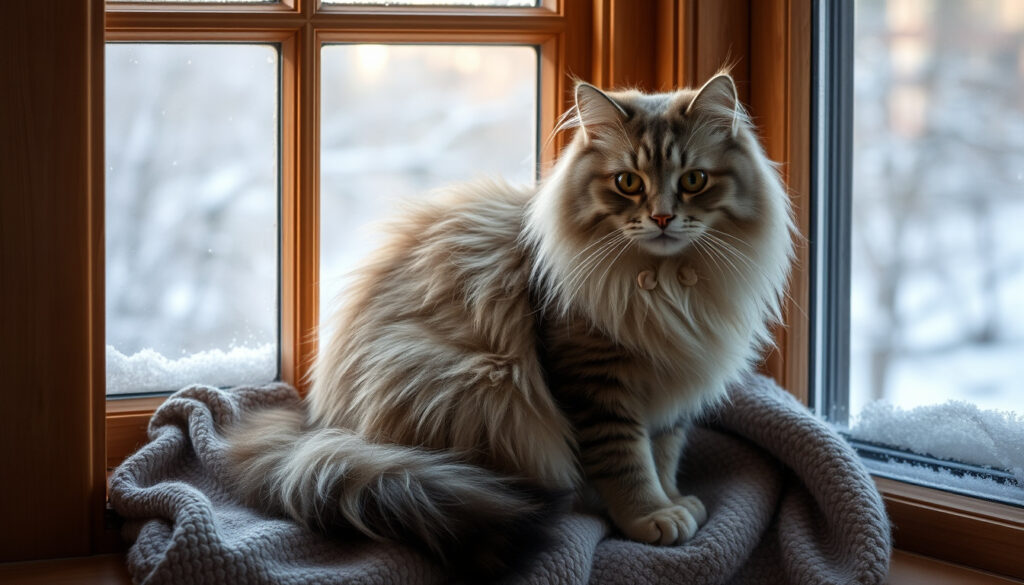
There’s a quiet warmth to a Siberian cat that catches you off guard — under that dense, water-resistant coat lies a breed shaped by centuries of Russian winters, not show-ring trends. If you’re considering one for your home, you’ll want to know what makes them different from other semi-longhairs and whether the hypoallergenic reputation holds up to scrutiny.
Weight (male): 15–20 lb (Wikipedia) · Weight (female): 12–15 lb · Coat: Semi-longhair triple coat (The International Cat Association (TICA)) · Life expectancy: 12–15 years (Petful)
Quick snapshot
- Natural landrace from Russia (Wikipedia)
- Produces lower Fel d 1 than most breeds (TICA)
- Males 15–20 lb, females 12–15 lb (Wikipedia)
- Affectionate, playful, dog-like loyalty (Litter‑Robot)
- Exact hypoallergenicity degree varies per individual cat — no cat is 100% allergen-free (Litter‑Robot)
- HCM incidence in Siberians: no large‑scale studies (Royal Canin Ireland)
- Actual average price in Ireland: no authoritative survey (Litter‑Robot)
- Slow‑maturing, full size at 3–5 years — individual timing varies (Litter‑Robot)
- Kitten teeth replaced 4–7 months (Royal Canin Ireland)
- Maturity at 3–5 years (Royal Canin Ireland)
- Seasonal shedding twice yearly (Scrumbles)
- Research breeders in Ireland; request Fel d 1 test results
- Plan for a 12‑15 year commitment with high grooming needs
- Consider pet insurance covering HCM screening
Ten facts, one pattern: the Siberian’s strengths (low allergen, slow maturation, sturdy build) come with real trade‑offs in cost, grooming, and health monitoring.
| Attribute | Detail |
|---|---|
| Origin | Russia, natural landrace centuries old |
| Coat | Semi‑longhaired triple coat, water‑resistant |
| Weight range | Males 15–20 lb, females 12–15 lb |
| Life span | 12–15 years |
| Hypoallergenic | Produces lower Fel d 1 than average, but not fully hypoallergenic |
| Temperament | Affectionate, playful, calm, dog‑like loyalty |
| Activity level | Moderate |
| Shedding | Heavy (seasonal – twice yearly) |
| Grooming needs | High: weekly brushing, daily during shedding |
| Recognition | CFA, TICA, FIFe |
Is a Siberian cat a good pet?
Siberian cat temperament and personality
- Affectionate and playful yet calm – described by TICA (the global cat registry) as “loyal and dog‑like.”
- Intelligent and curious, often learning tricks and following owners from room to room.
- Slow maturation means they retain kitten‑like playfulness well into adulthood.
The pattern: a cat that bonds deeply without being demanding. For families who want an interactive but not high‑strung companion, the Siberian fits.
Siberian cat behavior with children and other pets
- Generally good with children and other animals due to their patient, social nature.
- Dog‑like traits extend to getting along with dogs when properly introduced.
- They are not shy or aggressive, making multi‑pet households manageable.
Siberians are one of the few breeds that combine calmness with playfulness, but they need human interaction. A home that leaves them alone for long stretches may see a bored, destructive cat.
The trade‑off: you gain a devoted family member but must invest time in daily engagement. If you already own another large breed — such as an English Mastiff — you’ll recognise the pattern of a loyal, slow-maturing companion that thrives on interaction.
Are Siberian cats more expensive than other breeds?
Average price of a Siberian cat in Ireland
- Purebred Siberian kittens from reputable breeders range from $1,000 to $3,000 (€900–€2,700) (Treehugger).
- Pet‑quality kittens typically land around $1,200–$2,500, while show‑quality lines can reach $4,000.
- In Ireland, specific breeder prices are not systematically surveyed; DoneDeal listings suggest €900–€2,500 but lack verification.
Factors influencing Siberian cat cost
- Breeder reputation, bloodline, and health screenings.
- Hypoallergenic‑tested lines command a premium, but Petful warns that price does not correlate with measurably lower Fel d 1.
- Location: Siberian breeders are rare in Ireland, often requiring waiting lists and travel.
What this means: a Siberian is a significant upfront investment. The real risk is paying a premium for a “hypoallergenic” label that science doesn’t fully back.
Are Siberian cats indoor cats?
Can Siberian cats live exclusively indoors?
- Yes, they thrive indoors with sufficient enrichment – cat trees, puzzle toys, and window perches.
- Their high intelligence demands mental stimulation to prevent boredom.
Outdoor risks for Siberian cats
- The thick triple coat protects against cold but does not shield from cars, predators, or disease.
- Indoor‑only cats have significantly longer average lifespans (12–15 years vs. 2–5 for outdoor cats).
A Siberian’s heritage as a Russian landrace might suggest it needs outdoor space, but modern veterinary consensus favours an enriched indoor life. The trade‑off: you must actively create a stimulating environment, or risk a frustrated cat.
Why this matters: for Irish owners, autumn and winter weather is manageable, but road traffic and territorial fights make indoor‑only the safer default.
How do I tell if my cat is a Siberian?
Physical characteristics of a Siberian cat
- Semi‑longhaired triple coat with a water‑resistant top layer.
- Large, muscular body – males 15–20 lb, females 12–15 lb.
- Round eyes, medium‑sized ears with tufts, a bushy tail.
Coat, body size, and facial features
- All‑weather coat that thickens in winter and sheds in spring and autumn.
- Slow‑maturing: full size not reached until 3–5 years – a key identifier.
- Facial structure: slightly rounded muzzle, expressive eyes, and a gentle expression.
The pattern: no single feature guarantees a Siberian; pedigree documentation from a TICA‑ or CFA‑registered breeder is the only sure way.
What are the cons of Siberian cats?
Shedding and grooming requirements
- Heavy seasonal shedding – twice yearly “coat blow”.
- Weekly brushing required; daily during peak shedding to prevent mats.
- Not a low‑maintenance coat – owners must commit to grooming sessions.
Potential health issues in Siberian cats
- Prone to hypertrophic cardiomyopathy (HCM) – a common feline heart disease (Royal Canin Ireland).
- No large‑scale prevalence studies exist for Siberians, making risk quantification difficult.
- Regular veterinary cardiac screening is recommended for breeding lines.
The HCM risk means pet insurance with heart‑condition cover is advisable. Combined with higher purchase cost, the total ownership expense can exceed €3,000 in the first year.
The trade‑off: you get a robust, long‑lived breed, but you must budget for preventive health care and a serious grooming routine.
Upsides
- Affectionate, dog‑like loyalty – bonds strongly with family
- Lower Fel d 1 levels – may be tolerable for some allergy sufferers
- Slow maturation means playful personality lasts years
- Good with children, dogs, and other cats
- Striking, water‑resistant coat – beautiful and practical
Downsides
- Heavy seasonal shedding requires daily brushing for weeks
- Expensive to buy – $1,200–$4,000
- Prone to HCM – veterinary screening costs add up
- Rare in Ireland – long waiting lists, limited breeder options
- Hypoallergenic claim is not universal – individual responses vary
Before committing, match these trade‑offs against your lifestyle. A busy owner who dislikes brushing may find a short‑haired breed more practical — similar to choosing between an English Mastiff and a lower-maintenance dog breed.
Siberian cat specifications
Eight core specs, one takeaway: the Siberian is a large, slow‑growing breed built for cold climates with a coat that demands effort.
| Specification | Value |
|---|---|
| Body type | Substantial, rectangular, muscular |
| Coat length | Semi‑longhair (triple coat) |
| Coat texture | Coarse, water‑resistant outer; dense, soft undercoat |
| Colour varieties | All colours and patterns including colourpoint |
| Eye colour | Any – green, gold, blue (in pointed cats) |
| Ear shape | Medium, slightly rounded tips with tufts |
| Tail | Bushy, slightly shorter than body length |
| Maturity age | 3–5 years |
Clarity: what we know and what remains uncertain
Confirmed facts
- Natural landrace from Russia
- Produce lower Fel d 1 than most breeds
- Slow‑maturing, full size by 3–5 years
- Affectionate, playful, dog-like loyalty
What’s unclear
- Exact degree of hypoallergenicity – individual allergy responses vary
- Precise incidence of HCM in Siberians – no large‑scale studies available
- Actual average price in Ireland – only DoneDeal listings, no authoritative survey
- Males weigh 15–20 lb, females 12–15 lb — ranges vary by bloodline and diet
What the experts say
The Cat Fanciers’ Association describes the Siberian as a large, powerful, slow‑maturing cat that retains its playful personality well into adulthood.
Wikipedia, citing CFA breed standard
TICA notes that Siberians are considered a hypo‑allergenic cat breed because they have far less reduced levels of Fel d 1 protein sequence in their genes than other breeds.
The International Cat Association (TICA breed page)
Siberian cats are known for their dog‑like loyalty, often following their owners around the house and greeting them at the door.
Litter‑Robot (pet care brand)
The collective judgment from registries and veterinarians points to a breed that excels as a family companion but carries real financial and grooming commitments. For Irish buyers, the scarcity of local breeders and the lack of a national price survey mean due diligence is essential.
reddit.com, facebook.com, kissfromarosesiberiancattery.com, sunovasiberians.com, weenect.com
For a deeper look into the hypoallergenic claims about Siberian cats, you can explore a detailed guide that examines the science behind this popular belief.
Frequently asked questions
Are Siberian cats good for allergy sufferers?
Many Siberians produce lower Fel d 1 levels, but no cat is 100% hypoallergenic. Individual allergies vary, so spend time with a breeder’s cat before committing.
How much does a Siberian cat cost in Ireland?
Expect €900–€2,700 from reputable breeders. Breeder prices in Ireland are not systematically surveyed; check DoneDeal and Irish Cat Clubs for current listings.
Do Siberian cats shed a lot?
Yes – they shed heavily twice a year (“blowing coat”). Weekly brushing becomes daily during shedding. Owners must commit to grooming.
Are Siberian cats good with dogs?
Generally yes. Their dog‑like loyalty and calm temperament help them coexist with canine companions when introduced properly.
How often should I groom a Siberian cat?
Weekly brushing most of the year; daily during spring and autumn shedding seasons to prevent mats.
Do Siberian cats like water?
They have a water‑resistant coat and many enjoy playing with water, though individual preferences vary.
What is the best diet for Siberian cats?
High‑quality protein‑rich food appropriate for their life stage. Kittens need wet food transitioning to kibble as teeth develop.
For Irish owners weighing a Siberian, the decision is clear: invest in a reputable breeder, budget for grooming and vet screening, and prepare for a loyal, energetic companion that will dominate your living room—and your heart—for a decade or more. Irish pet owners considering other large-breed companions may also find value in Ireland-focused gift guides for pet lovers when planning for a new family member.
More related posts
 Niecy Nash: Identity, Career, and Marriage to Jessica Betts
 Basketball Zero Codes (May 2026): Free Lucky Spins & Rewards
 Phillip Danault: Biography, Trade, and Career
 Sebastian Bach: Sobriety, Apology, and Life After Skid Row
 Best Restaurant Riviere du Loup: Top Picks & Menus
 Best Buy Near Me – Store Locator, Hours and Services
 Pleine Lune Août 2025 – Date, Time & Observation Guide
 Mack Hollins: Barefoot NFL Wide Receiver’s Unique Habits
